Our Services

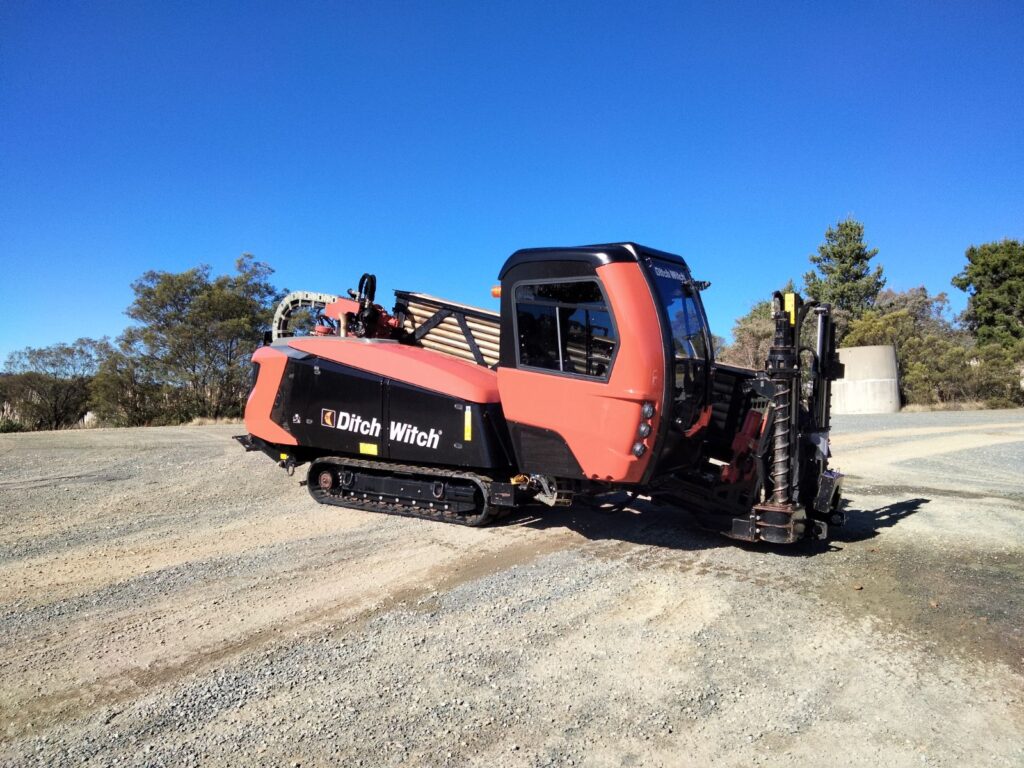
Directional Drill Ditch Witch

HDD & All-Ground Conditions Capabilities

Horizontal directional drilling (HDD), also known as directional boring, is a trenchless method of installing underground utilities, pipelines, and conduits. It involves drilling a hole horizontally through soil or rock in a predetermined direction using specialised equipment and techniques.

The HDD process begins with a pilot hole being drilled along the desired path for the utility. Once the pilot hole is complete, it is enlarged by using a reamer to make a hole large enough to accommodate the utility. The utility is then pulled through the enlarged hole and connected at both ends.

HDD offers several advantages over traditional open trench excavation methods, including less disruption to the environment and reduced construction time and costs. HDD is commonly used for installations under roads, highways, rivers, and other obstacles that would be difficult or expensive to excavate.
Employee Operating Vac Truck

Experts in Vacuum Excavation (NDD)

Vacuum excavation, also known as hydro excavation, is a non-destructive method of digging that uses highly pressurised water and industrial-strength vacuum to precisely excavate soil and remove debris. It involves inserting a high-pressure water nozzle through a small opening in the ground to break up soil, while simultaneously using a vacuum to remove the loosened soil and debris.

Vacuum excavation is commonly used for exposing underground utilities, such as gas lines, fiber optic cables, and electrical lines, as it allows for precise and safe excavation without damaging the utilities. It is also used for excavation in sensitive areas where traditional digging could cause damage to the environment or nearby structures.

Vacuum excavation can be used for both residential and commercial projects and offers several advantages, including reduced damage to the surrounding area, faster excavation times, and improved accuracy when digging around underground utilities. This method is safer than traditional digging methods because it reduces the chance of utility damage, injury, and accidents.

1 Mechanical Excavation

Mechanical Excavation Services

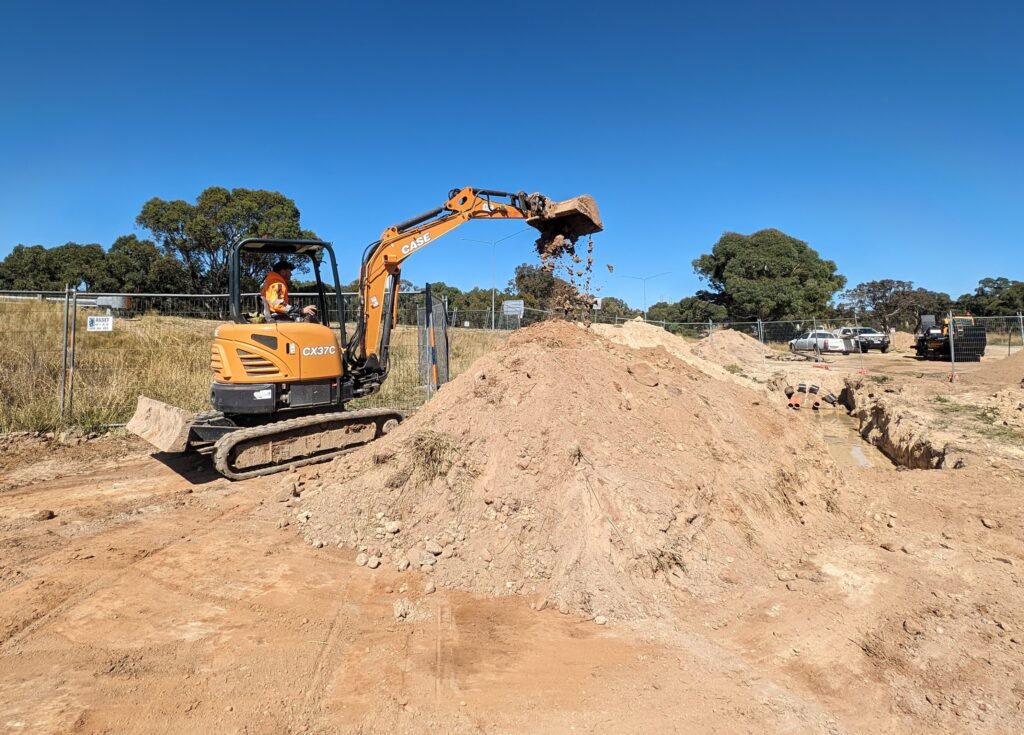
Mechanical excavation refers to the process of digging through soil or rock using specialised excavation equipment such as excavators, trenchers, and other heavy machinery. This method of excavation involves the use of force to remove soil or rock and create a hole or trench.

Mechanical excavation is typically used for larger-scale construction projects, such as building foundations, roadways, and utility installations, where a significant amount of soil or rock needs to be removed. It is a fast and efficient method of excavation, and the use of heavy equipment allows for the removal of large amounts of soil or rock in a relatively short period.

One of the main benefits of mechanical excavation is that it can be used for a wide range of soil types and conditions, including clay, sand, and gravel.

Pulling Pipe

Cable Hauling Solutions

Cable hauling involves pulling or laying cables for network infrastructure, ensuring efficient connectivity and seamless communication for diverse applications.

Cable hauling, also known as cable pulling or cable installation, is the process of laying and installing cables, wires, or other flexible conduits along a predetermined path. The installation process typically involves pulling the cable through a pre-existing duct or conduit, or by dragging it through an excavated trench.

Cable hauling is used in a wide range of industries and applications, such as telecommunications, power and utility infrastructure, and data centres. The process requires specialised equipment and skilled operators to ensure that the cable is installed safely and efficiently without damage.

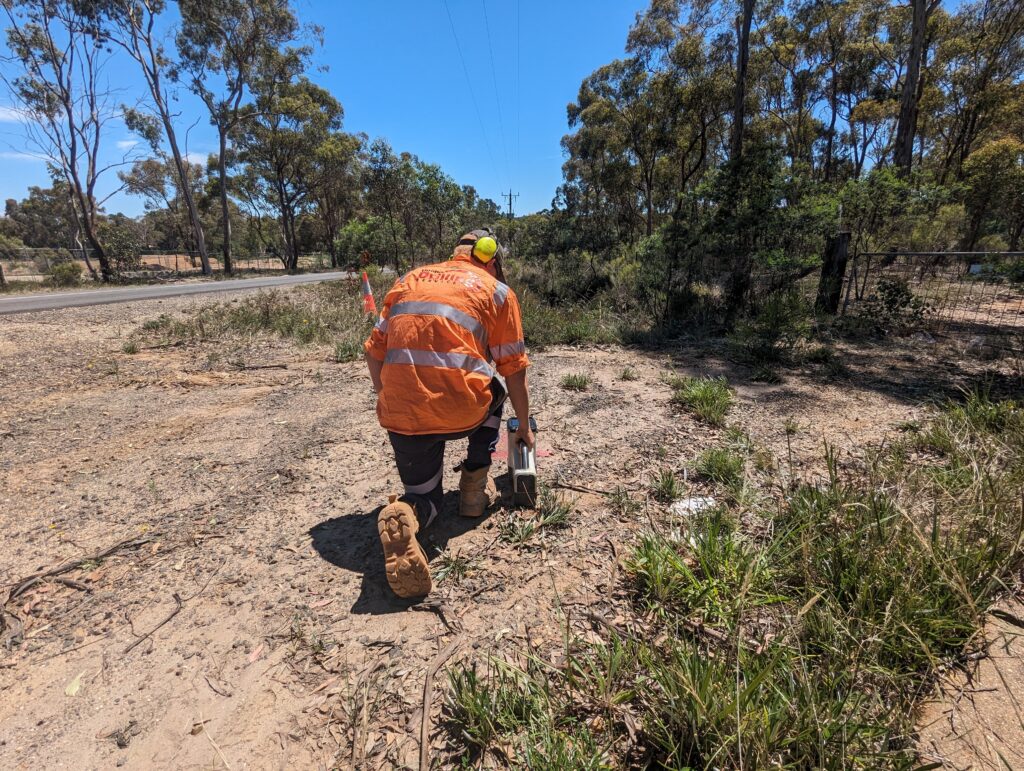
Employee Tracking Directional Drill Rod

Asset Locating & Mapping

Asset locating, also known as utility locating, is the process of identifying and mapping the location of underground utilities, such as gas lines, electrical cables, and water pipes. This process is typically used during excavation or construction projects to prevent accidental damage to utility infrastructure, which can be costly and dangerous.

Asset locating is carried out using specialised equipment, such as service locators, by trained professionals who can accurately pinpoint the location of underground utilities. The process involves sending signals through the soil or concrete to detect any metal or other conductive materials, allowing the technician to create a map of the utility infrastructure in the area.

Asset locating is essential for ensuring worker safety, protecting underground utilities, and avoiding costly repair and replacement expenses. Accurately locating underground assets helps reduce the risk of damage to utilities, which can cause service outages, harm workers, and require expensive repairs.

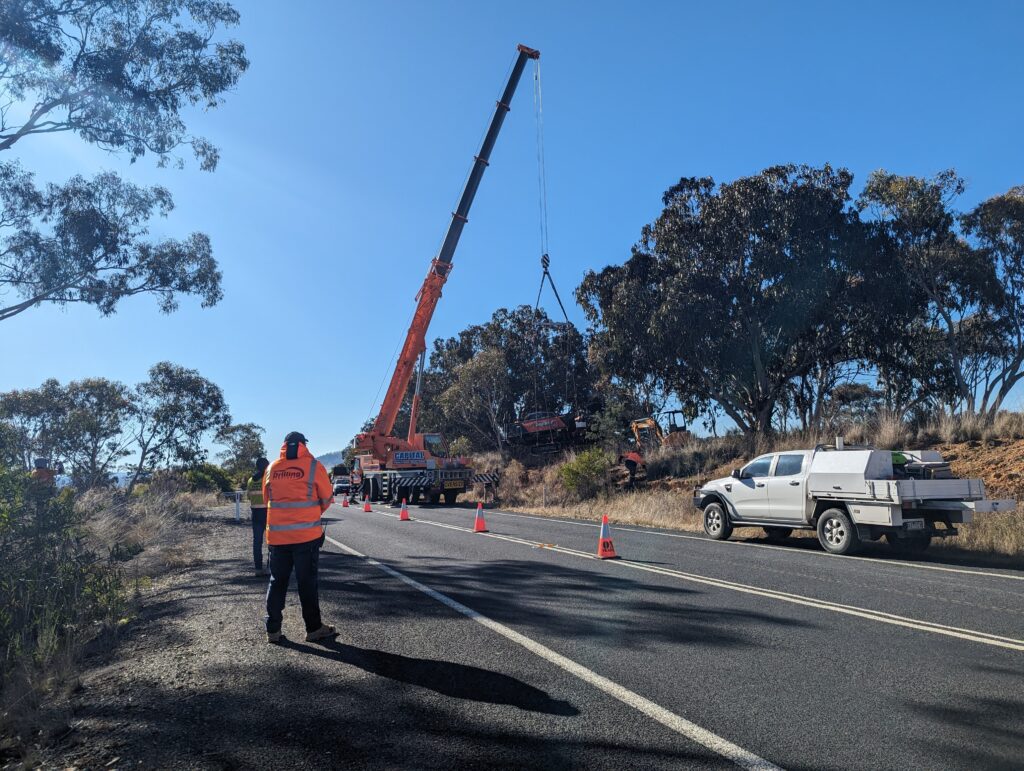
Directional Drill Crane Lift

Design & Construction of New Infrastructure

Design and construction of utilities infrastructure refer to the process of planning, designing, and building essential public works projects that provide services like water supply, sewerage systems, gas supply, electrical power supply, and telecommunication services.

The design and construction of utilities infrastructure begin with a comprehensive study to identify the project requirements. The initial stage takes into account a detailed review of available resources, including available resources, and estimated costs. The goal is to determine the scope of the project, how it will be carried out, how the infrastructure will be operated and maintained, and how the project will be funded.

Once the planning is complete, the project moves into the design phase. During this phase, the detailed design of the utilities, including pipelines, pumping stations, and treatment systems, are developed. Detailed specifications are prepared, and construction plans created which will guide the construction process.

Uds Employee With Directional Drill

Integrated Project Management (IPM)

Integrated Project Management (IPM) is a comprehensive approach to project management that involves the integration of various project elements, including scope, cost, quality, schedule, risk, and resources. It emphasises collaboration, communication, and teamwork among all stakeholders involved in the project to ensure the project’s goals are met.

The IPM approach helps project managers to plan, execute, monitor, and control projects more effectively by using a multidisciplinary approach. It provides a framework for project management that supports a comprehensive understanding of the project’s objectives, requirements, and constraints, as well as how each element of the project can impact the other elements, so that they can be effectively managed throughout the project’s lifecycle.

The ultimate goal of integrated project management is to ensure that all elements of a project are integrated, coordinated, and aligned with the project’s goals, thereby ensuring that the project is delivered on schedule, within budget, and to the required quality standards.

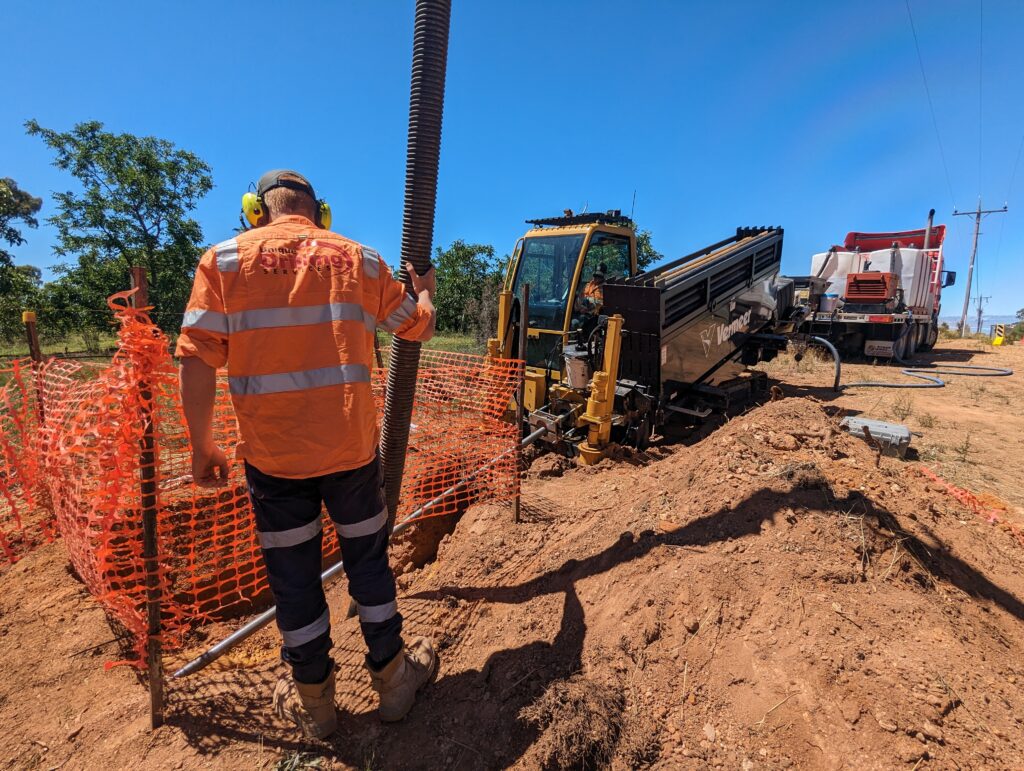
Vermeer Directional Drill With Vac Truck

Pit & Pipe Installation Services

Pit and pipe installation is a method of installing underground utility services that involves the use of pits and pipes. The pits are excavated holes used as access points for the installation of pipelines and conduits. The pipes are installed in trenches or via directional drilling methods, connecting the pit locations.

Pit installation involves excavating holes in the ground to a suitable depth to allow for the installation of various utility services including telecommunications cables, electrical power lines, gas pipelines, water, and sewage pipelines. The pits are designed to provide access for future maintenance and repairs.

Pipe installation involves laying pipes in trenches or using directional boring method and they are connected to the pit locations. The pipes are used to convey various services including gas, water supply, telecommunications, and electrical power.

The process of pit and pipe installation includes identifying the location, measuring the depth and length of the trenches to be excavated or drilled. Additionally, it also involves planning for the necessary equipment and manpower required for the installation process.

Pit and pipe installations require precise planning, excavation, installation, and reinstatement of the trenches to ensure the service runs efficiently. Adequate safety measures need to be observed during the installation process to prevent any hazard to the environment and communities surrounding the site.

The pit and pipe installation method is widely used due to its ability to allow various services to be installed in the same excavation site provided there is enough space and optimal safety standards are followed. It also minimises the need for multiple excavations, thus reducing the cost of installation and maintenance.

Fiber Blowing

Fibre Blowing Technology

Fibre blowing is the process of installing fibre optic cables into pre-installed microducts by using compressed air. The fibre-blowing technique can be used for both short and long installation runs.

In fibre blowing, the technique involves pushing or blowing fibre optic cables through the microducts, which guide the cable through the route installed during the ducting process. For example, at the entry point, the fibre cable is anchored to a fibre-blowing machine, and compressed air is passed through the duct, which propels the fibre cable. The microducts are carefully analysed for potential bends and curves, which are prepped with adequate lubrication before cable deployment.

Fibre blowing has several advantages over traditional cable pulling techniques. One advantage is speed; fibre blowing is considerably faster than traditional cable pulling because of the pre-existing conduits installation, where the fibre cable is pushed through quickly, and multiple fibres installed simultaneously. It also reduces installation costs as only smaller diameter ducting is needed, which means smaller trenches and shallow trenching are applied, and disturbance to the surrounding areas reduced.

Fibre blowing technique is also useful when there are limited installation constraints, such as retrofit installations, indoor installations, vertical cable runs, or install locations that have narrow spaces. The compact, non-intrusive nature of fibre cables make them especially useful in tighter areas where pulling traditional copper cables might be problematic.